
Most free Yaahlan diamond claims are not real savings. In practice, they are usually phishing bait, fake promo pages, or risky payment abuse wrapped in the language of a shortcut. The safer way to recharge is much less exciting: confirm the correct account ID, check the region and checkout path, and save your proof the moment you pay. That matters because a cheap top-up, a pending payment, or a later reversal can create more trouble than the discount was worth.
Yaahlan is an Arabic social voice chat app with mini-games, and Yaahlan Diamonds are its premium currency for things like voice chat gifts, VIP badges, and room effects. That makes them attractive not only to normal buyers, but also to scammers who know users want fast delivery and low prices. The result is a market full of half-truths: some discounts are normal, some are dangerous, and some free diamond offers are simply fake.
Are free Yaahlan diamonds real or always fake?
This is the easiest myth to clear up: free diamond generators, hacks, and miracle promo tools are not a legitimate recharge method.
Community evidence around digital currency scams is consistent here. Most free-generator style tools are not giving away value; they are trying to collect something from you instead. In many cases that means login credentials, device access, payment details, or malware installation. The available data is blunt enough to be useful: 90–95% of free diamond generators are reported to contain malware. Even when the page looks polished, the underlying pattern is familiar—fake urgency, fake verification, and a promise that sounds better than any normal promotion would.
A legitimate offer, if one exists, still has rules, limits, and a clear source. It does not need your password to sync rewards. It does not need a one-time code sent to your phone. It does not need remote access to your device. And it certainly should not ask for full card details through chat.
That safety boundary is one of the clearest in the entire Yaahlan recharge process. Safe verification is typically limited to the account identifier needed for delivery. Community guidance describes UID-only recharge as the normal path on third-party sites: enter the 8–12 digit User ID, pay, then refresh the wallet. No login should be required.
So when people ask whether free Yaahlan diamonds are real or fake, the practical answer is this: treat free as suspicious unless it comes through a clearly established official route or a verified seller promotion with normal checkout and normal proof. Fake promo codes and fake bonus pages are common enough that caution is the default, not paranoia.
Why do some Yaahlan diamond offers look much cheaper?
Cheap does not automatically mean scam, but it absolutely changes the risk profile.
There are ordinary reasons a web or reseller price can beat an in-app price. One major factor is platform fees. Community data says app store top-ups lose around 30% to platform fees, which helps explain why web checkout, gift cards, or UID recharge routes can look better on value without being inherently suspicious. Gift cards, for example, are reported from $0.99 for 470 Diamonds up to $159.99 for 77,600 Diamonds, with bonus value ranging from 11.9% to 15.5% per USD spent. One data point also suggests 17.5% more Diamonds from gift cards versus an in-app $0.99 purchase.
That is the reasonable side of discounting. The unreasonable side starts when the price gap becomes extreme and the seller cannot explain it through normal distribution or fee differences. Community warnings specifically flag prices 30–40% below face value as a danger sign for stolen codes. That does not prove every low price is fraudulent, but it does tell you where the risk starts to spike.
This is why the cheapest visible price is not always the lowest total cost. A suspiciously cheap order can still appear successful at first. The payment may authorize. The diamonds may even show up. But later problems are what make these deals expensive: code invalidation, payment review, reversal of credited value, or support refusal because the source was unauthorized.
By contrast, authorized or established reseller routes are described much more narrowly. Community reports mention authorized resellers such as BitTopup, EnjoyGM, 94LIVES, SEAGM, MTCGame, and Gamzio. Reported third-party discounts can reach up to 38% versus official pricing, and authorized UID recharges are associated with a 95% success rate, with 98% of verified platform orders delivering within 3 minutes. Those are not guarantees, but they are a very different signal from a random 90% off code page with no support trail.
The useful buyer mindset is not cheap equals bad or cheap equals smart. It is what explains this price, and what happens if something goes wrong?
Can a Yaahlan recharge chargeback backfire later?
Yes. A chargeback is not a harmless shortcut to free diamonds.
This is one of the most misunderstood parts of digital top-up. Buyers often assume that if a payment dispute succeeds, the credited currency simply becomes a free win. That is not how digital value usually works. A chargeback is a payment dispute through the card issuer or wallet provider. Delivery of diamonds is a separate event. If the payment is later reversed, the credited value can also be reversed, frozen, or investigated.
There is no official Yaahlan chargeback policy surfaced in the provided data, so it would be wrong to claim a fixed outcome. But the available guidance is still clear enough to be practical. Community reports say chargebacks in similar apps can lead to account bans, and the same advice appears here: contact support first. Another fact in the database states directly that a chargeback after top-up can reverse credits if successful.
That matters because many payment problems are not fraud problems. A card can show an authorization before the order fully clears. A wallet payment can remain pending. A region mismatch can delay delivery. A wrong UID can send the diamonds elsewhere. None of those situations is improved by treating chargeback as the first move.
A better way to think about it is this:
If the order is merely delayed, a dispute is premature.
If the order was delivered, a dispute can trigger reversal of the credited value later.
If the transaction was truly unauthorized or the seller is unresponsive after normal support steps, then payment-provider escalation may be appropriate.
In other words, buyer protection is not the same thing as a free-currency loophole. For Yaahlan recharge safety, chargeback should be a last resort, not a buying strategy.
What should you verify before paying for Yaahlan Diamonds?
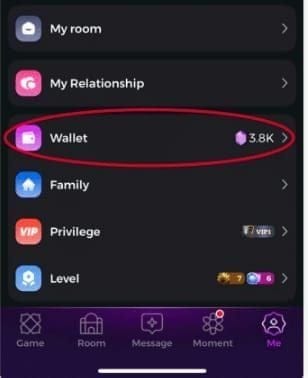
The biggest preventable mistake is paying before confirming exactly where the diamonds are supposed to go.
For UID-based recharge, that starts with the account ID. Community guidance says to copy the Yaahlan UID from the Me tab, enter it on the reseller site, pay, and then refresh the wallet. That sounds simple, but it is also where the highest-cost user error happens: a wrong UID sends Diamonds irreversibly to another account. The database is explicit that wrong UID top-ups are non-refundable in community experience, so this is not a detail to rush through.
Beyond the UID itself, a careful buyer should also check the broader payment context. Region matters. One fact notes that the account region should match the payment region to avoid blocks, and another describes Yaahlan recharge as region-locked for seamless delivery. Community warnings also advise avoiding VPN use during recharge if it creates a region mismatch. If the checkout suddenly shows a different country or currency than expected, that is not just a cosmetic issue; it can affect authorization, tax display, or whether the order gets flagged.
The platform path matters too. If you buy in-app, the support route is usually tied to app store billing. If you buy through web checkout or a reseller, the seller support path is different. That distinction becomes important later if the order is pending or missing. It also affects value, since in-app purchases are reported to lose more to platform fees.
For first-time buyers, the safest pre-payment check is a short pause to confirm five things in plain language: the correct UID, whether the purchase is for your own account or another account, the account region, the checkout route you are using, and the final currency shown before payment. That small pause prevents a surprising number of disputes.
Buying for another account can be safe, but only if you treat the recipient details as the whole transaction. UID-only recharge is designed for that use case, yet it is also unforgiving. If the recipient ID is wrong, the system may still work perfectly—it will just work for the wrong person.
What should a safe Yaahlan recharge process never ask for?

A legitimate recharge process should not ask for your password, one-time code, or unrelated identity data.
This is the cleanest line between normal verification and suspicious verification. Community guidance repeatedly describes safe Yaahlan recharge as UID only, with no password or login required. That means the seller needs enough information to deliver the diamonds, not enough information to enter your account.
Red flags include any request for:
your Yaahlan password
a one-time passcode sent by SMS or app
full card details through chat
remote control of your phone or computer
identity documents unrelated to a payment review
By contrast, normal support requests are much narrower. If there is a problem, support may ask for the order ID, receipt, payment timestamp, UID, and screenshots. Those requests are tied to the transaction itself. They are not asking you to surrender account control.
This distinction matters because scam pages often imitate security checks. They use the language of verification to make invasive requests sound routine. But in a normal UID recharge flow, the process is intentionally limited. You provide the UID, complete payment, and check the wallet after refresh. If the process suddenly expands into login recovery, OTP sharing, or off-platform identity collection, the risk has changed.
What if the diamonds do not arrive or the payment stays pending?

Do not panic, but do not wait empty-handed either. Save proof first, then troubleshoot in the right order.
The most useful proof bundle is consistent across the available guidance: save the order ID, receipt, payment timestamp, UID screenshot, and screenshots showing the wallet or account state after payment. This is the material support teams usually need, and cases move faster when the buyer already has it ready.
For missing or delayed diamonds, the realistic path is not complicated. Community guidance says UID recharges often deliver in 1–3 minutes, and 98% of verified platform orders reportedly arrive within 3 minutes. But delays still happen. The recommended response is to refresh the wallet, wait 5–30 minutes, restart the app, and then contact reseller support with proof. Another troubleshooting note gives the same structure: refresh wallet, wait 30 minutes, contact the reseller with evidence.
Who you contact first depends on how you paid. If you used a reseller or web checkout, seller support is usually the first stop because they can check order status, delivery logs, and account matching. If you paid in-app, the app store billing path may be relevant, especially after a phone change, since in-app purchases may need to be restored through the App Store or Google Play. If the issue is a card authorization or a pending wallet charge rather than a missing delivery, the payment provider may become relevant later—but usually not before the seller has had a chance to verify the order.
A few payment terms also help reduce confusion:
Card authorization means the issuer approved the transaction amount, but that does not always mean the order is fully settled.
Pending charge means the payment is still being processed or reviewed. It is not the same as a confirmed failed order.
Statement descriptor is the merchant name that appears on your bank or card statement. The database notes that descriptors can vary by reseller, such as BitTopup or EnjoyGM, so the charge may not always appear under a plain Yaahlan label.
Wallet or app-store differences matter because web checkout, app store billing, and reseller checkout can each have different support paths and timing expectations.
If you are trying to decide whether to wait, contact support, or escalate to the payment provider, the practical rule is simple: if the order is merely delayed, use the seller or platform support path first. If the charge is unauthorized or remains unresolved after normal support, then payment-provider escalation becomes more reasonable.
The safer way to judge a Yaahlan diamond deal
The safest route is usually the one that asks for the least sensitive information, gives you a clear proof trail, and has support you can actually reach.
That is why UID-only recharge remains the most sensible benchmark. Community consensus favors UID-only third-party recharges from established sellers because they are fast, require no login, and can offer better value than in-app purchases. Gift cards can also make sense, especially for buyers who want prepaid control and to avoid app store fee drag. Community guidance even describes gift cards as safer than direct top-up for avoiding app store fees.
But safer does not mean anything outside the app is automatically safe. The route still needs basic credibility: HTTPS, visible support, normal checkout, and no requests for passwords or one-time codes. It also needs a realistic price. A moderate discount can be explained. An absurd discount usually means the risk has simply been moved from the seller to the buyer.
For returning buyers, the temptation is often speed. For first-time buyers, it is usually price. In both cases, the better habit is the same: buy with proof, not hope. Confirm the UID. Check the region and currency. Save the receipt and timestamp. Know whether you used app store billing or web checkout. And if something goes wrong, start with support before reaching for a chargeback.
That is the real takeaway behind Yaahlan Diamond Recharge Myths Busted: the dangerous myths are not just about free diamonds. They are also the quieter assumptions—that the lowest price is automatically the best deal, that a successful payment screen guarantees permanent delivery, or that a chargeback is a harmless reset button. In digital top-up, the safer choice is usually the one that looks a little more boring and leaves a much better paper trail.
👉 Yaahlan safe diamond top up 👈
✅ Safe and convenient digital top-up service
✅ Orders are processed promptly after successful payment
✅ Supports popular products and recharge scenarios
✅ Customer support can help with order issues