
Third-party Steam Wallet top-up can be safe, but it is not the safest default. For most people, official Steam checkout is the more reliable route because payment security, delivery certainty, refund rules, and support responsibility are clearer. Buying outside Steam becomes reasonable only when the seller passes strict trust checks: clear region wording, HTTPS checkout, visible refund terms, trackable orders, and support that never asks for your Steam login. The biggest avoidable mistake is usually not payment failure, but buying a code that does not match the account’s country or wallet currency.
Official checkout or third-party Steam Wallet top-up: which is actually safer?
The short answer is simple: official Steam checkout is safer in the practical sense most buyers care about. If you want the lowest chance of confusion, the clearest refund path, and the strongest support coverage, buying directly through Steam Store is the benchmark.
But this comparison only makes sense if you separate three different routes that often get lumped together as Steam Wallet top-up.
The first is direct checkout on Steam itself. That means adding funds through Steam Store using supported payment methods such as credit card, debit card, Google Pay, Apple Pay, bank transfer, or local-currency checkout where available. This route gives the cleanest chain of responsibility. If payment is delayed, if funds do not appear, or if you need to review your order history, the platform handling the wallet is also the platform handling support.
The second route is an official Steam Gift Card from an authorized retailer. This is usually much closer to official checkout than to a random marketplace listing. The code itself may be valid in an official-like sense, but the buyer still has to care about compatibility. A valid code is not the same thing as a redeemable code if the account region or wallet currency does not match.
The third route is an independent third-party seller. This is where safety becomes conditional rather than assumed. The main risk is usually not an automatic account ban. Community experience points more toward failed delivery, invalid or already used codes, region mismatch, or later revocation if the code came from fraudulent funds. In those cases, Steam Support generally does not become your purchase-resolution team. The seller does.
That difference matters more than a small discount. A cheaper listing is only a better deal if the seller can prove delivery, explain region limits clearly, and handle problems after payment.
What does safe actually mean when buying Steam Wallet credit?
When people ask whether a Steam Wallet top up is safe, they usually mean several things at once. Safety is not just Will my card be charged? It is whether the whole purchase remains predictable from checkout to redemption.
Payment security is the first layer. Official checkout is strongest here because the payment flow, the wallet, and the support system all belong to the same ecosystem. With third-party sellers, the payment may succeed while the order is still under review, delayed, or disputed. A completed charge does not always mean a completed delivery.
Delivery certainty is the second layer. Steam direct top-up adds balance directly. Gift card purchases, by contrast, depend on code delivery, usually by email or through the seller account after payment. That creates another point of failure. If no code arrives, the problem is not with your Steam Wallet yet; it is with the seller’s fulfillment.
Then there is code validity. A code can be delivered instantly and still fail because it was already used, invalid, unsupported, or tied to the wrong region or currency. This is why a buyer should judge a seller less by marketing language and more by whether the product page explains exactly what is being sold.
Refund clarity is another dividing line. Official Steam Wallet funds are refundable within 14 days if unused, and eligible refunds appear as wallet credit in about 24–48 hours. That is a very different environment from third-party purchases, where Valve cannot provide refunds for Steam Wallet cards bought from third parties. If the order goes wrong outside Steam, the seller’s policy becomes the real policy.
Finally, support accountability matters. If you buy directly from Steam, Steam Support is part of the route. If you buy from a seller, the seller owns the payment and delivery dispute. Steam may verify redemption context in some cases, but it does not take over third-party purchase problems.
What should you check before paying a third-party seller?
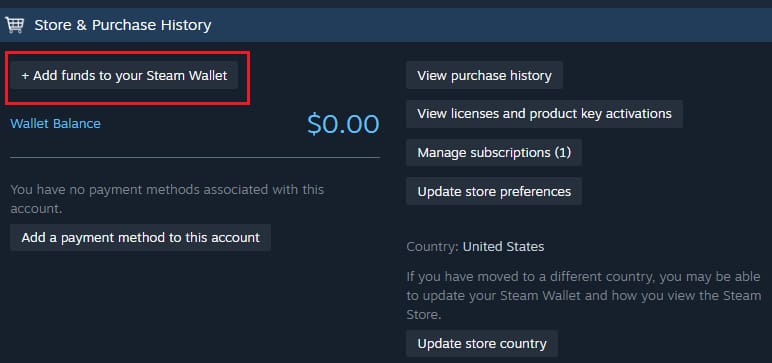
A trustworthy seller does not just look polished. It gives you a paper trail and a clear path if something goes wrong.
The strongest trust signals are surprisingly unglamorous: a visible business identity, HTTPS checkout, clear refund wording, a stated delivery method, order tracking or order history, and an actual support channel. Good sellers also make proof requirements obvious. If a problem happens, they should be able to tell you what they need: order ID, receipt, timestamps, code screenshot, or region evidence.
That is much more meaningful than a dramatic discount banner.
The warning signs are also consistent. Unrealistic cheap pricing is one of the clearest scam signals. Vague wording such as global without explaining region or currency compatibility is another. Pressure tactics are a bad sign because legitimate digital delivery does not need urgency theater. A site with no order record, no visible support path, or no refund page is asking you to trust it without giving you any leverage.
One red flag stands above the rest: any request for your Steam login credentials. Redeeming a Steam Gift Card only requires you to log in to your own Steam account and enter the code on the Redeem Steam Gift Card page. A seller should never need your Steam password to complete a wallet top-up sale.
If you are considering a third-party route such as Steam wallet third party top up, judge it by these operational details, not by the promise of a lower price.
Why do Steam Wallet top-ups fail even when payment goes through?
This is where many buyers get frustrated, because I paid and I received usable Steam balance are not the same event.
The most common preventable issue is region and currency mismatch. Steam wallet codes generally require matching account currency and region for redemption. Your account country determines your wallet currency, and mismatch can block the top-up. Community reports consistently describe this as a major reason a delivered code still throws an invalid-style error. Since the policy change that blocked cross-currency redemption, buyers have had less room for guesswork.
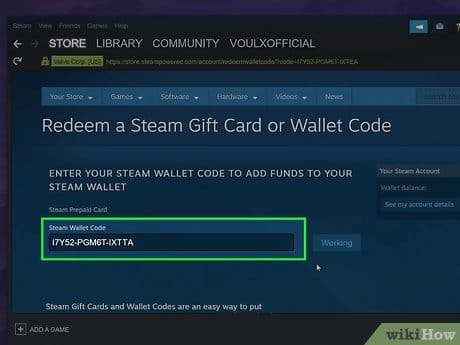
That is why region wording on the product page matters so much. If the listing is vague, the risk is not theoretical. It is built into the purchase.
Another common issue is delayed delivery. Some buyers expect instant balance because they are thinking of official direct checkout, but a seller may actually be delivering a redeemable code by email or through an account page after payment. That means there can be a delay for fraud screening, duplicate-order checks, or manual review even after the card or bank charge appears.
There are also straightforward code problems: already used, invalid, or unsupported codes. In those cases, the first move is not to argue in general terms. Capture the exact error message, save the code as delivered, and contact the seller first. Community guidance is consistent here: if the code was bought outside Steam and the balance was not added, the seller is the first line of resolution.
A smaller but real edge case is redemption throttling. Excessive gift card redemptions can trigger about a one-hour cooldown. That is not the same as a bad code, but it can confuse buyers who are redeeming multiple cards quickly.
For first-time users, expectations can also get mixed up with account limitations. New accounts generally need at least $5 in wallet balance or a store purchase to unlock certain features. That is not a failure of the top-up itself, but it is one reason official checkout is often the cleaner first purchase.
What proof should you keep, and who can actually help?
The fastest support outcomes usually come from documentation, not from repeated explanations. Whether you buy officially or through a seller, keep the order ID, payment receipt or invoice, code delivery record, and timestamps. If there is a redemption problem, add a screenshot of the exact error and a screenshot showing your account region or wallet currency. If you contact support, save the transcript.
This matters because support responsibility changes sharply by route.
With official Steam checkout, Steam Support is the natural escalation path. The payment, wallet balance, and order history all sit in one system. If the funds are eligible for refund and remain unused, official wallet funds can be refunded within 14 days, with refunds appearing as wallet credit in roughly 24–48 hours.
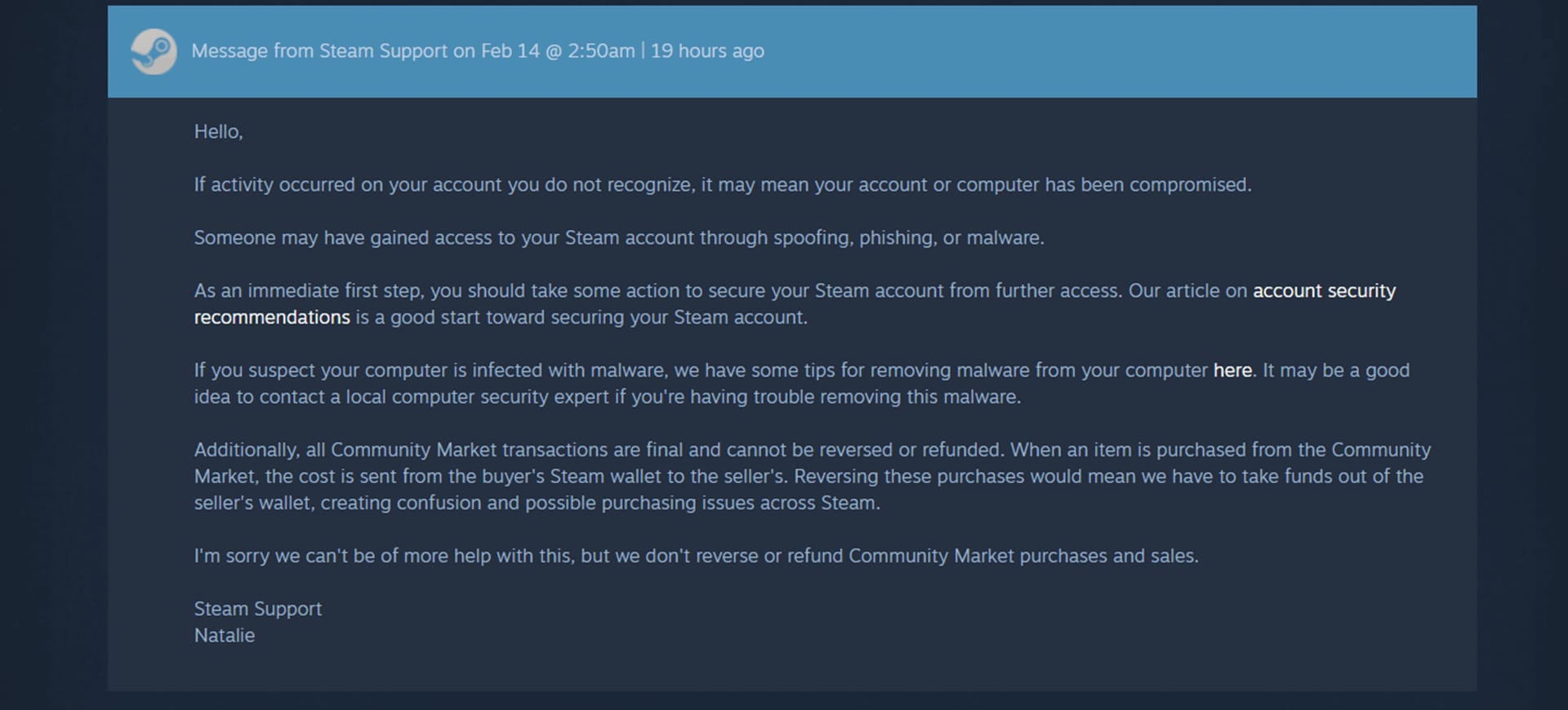
With an authorized retail gift card, the retailer usually handles payment and delivery issues first. Steam may be relevant to redemption context, but the purchase dispute still begins with the retailer.
With an independent third-party seller, the seller is usually responsible for missing delivery, invalid code claims, and refund handling. Official guidance is blunt on the key point: Steam Support does not assist with third-party wallet purchase issues, and Valve cannot provide refunds for Steam Wallet cards purchased from third parties. If the order fails, restoring your money or replacing the code is generally the seller’s responsibility only.
That is why proof should be collected before you need it. In digital top-up disputes, the difference between a quick resolution and a long back-and-forth is often whether the buyer can immediately provide the order record, receipt, code screenshot, and region evidence.
Which route makes sense for first-time buyers, high-value purchases, and gifts?
The safest route changes a little depending on who is buying and why.
For a first-time buyer, official checkout usually wins without much debate. It removes most of the ambiguity around region, delivery format, and support. It is also the simplest way to fund a new account if the goal is to unlock account features through a straightforward purchase rather than troubleshoot a code.
For a high-value buyer, the case for official checkout gets even stronger. Once the amount is large enough that a failed order would be painful, refund clarity matters more than a modest saving. A third-party route may still be acceptable if strict checks pass, but the burden of proof should be much higher. You want a seller with visible policies, trackable fulfillment, and a support path that is easy to document.
Gift purchases are where compatibility mistakes multiply. Before buying a Steam Gift Card for someone else, verify the recipient’s region. A gift that looks generous can turn into a support problem if the code does not match the recipient’s account country or wallet currency. Official routes are generally better for gifts because compatibility and support boundaries are clearer.
There is still room for a cautious yes on third-party purchases. Reputable sellers can be viable if they behave like accountable businesses rather than anonymous code drops. But viable is not the same as equally safe. The risk does not disappear; it becomes manageable only when the seller passes strict checks.
Bottom line: when is third-party Steam Wallet top-up worth the risk?
If your goal is the safest possible Steam Wallet top up, use official Steam checkout. If direct checkout is not available or you specifically need a gift card route, an authorized retailer is the next-best option. Independent third-party sellers belong in a narrower category: acceptable only when the trust signals are strong and the product wording is precise.
A practical standard is this: do not buy unless you can clearly identify the seller, see HTTPS checkout, read the refund terms, confirm the delivery method, track the order, and reach support without handing over your Steam login. Confirm your Steam account country and wallet currency before paying, especially if the purchase is for a gift. Keep your order ID, receipt, timestamps, and screenshots from the start.
That is the real answer to Is Third-Party Steam Wallet Top-Up Safe? Official Checkout vs Third-Party Risks and Trust Checks. It can be safe enough in selected cases, but official checkout remains the better choice for first-time buyers, high-value purchases, and anyone who wants the clearest support path if something goes wrong.