
For most players, the safer default is still official Path to Nowhere checkout. The reason is not just brand trust; it is that payment ownership, receipts, order records, and support responsibility are usually clearer through official channels such as Google Play or the Apple App Store. A third-party Path to Nowhere top up can still be reasonable when official payment access is limited by region, card verification, or billing restrictions, but only if the seller makes order tracking, refund boundaries, and support contact easy to verify before you pay.
Is official Path to Nowhere top up always safer than third-party recharge?
In practical terms, official usually wins on the things that matter after a purchase goes wrong.
For Path to Nowhere, the confirmed official top-up channels are Google Play and the Apple App Store. Community-observed patterns also suggest that official web checkout can be safe where it exists, but availability appears to depend on region, so it should not be assumed for every buyer. That distinction matters because safe in digital recharge does not only mean the payment page looks legitimate. It also means you can prove what you bought, identify who processed the charge, and reach the support team that actually owns the issue.
That is where official checkout has the advantage. Official billing typically gives you a receipt, an order ID, and a clearer support route. If a charge succeeds but Ultracubes or another entitlement does not appear, you are not starting from zero.
Third-party routes are more variable. Some community-reputed services are used successfully, and some require only a UID to deliver Ultracubes directly. There are also reports of lower prices on certain platforms, and some buyers use them because local payment methods are easier than international cards. But the safety gap shows up in edge cases: a wrong UID, a delayed delivery, a payment that appears successful without a completed order, or refund wording that becomes vague once something fails.
So the short answer is this: official is safer by default because the policy and support chain are clearer, not because every third-party order is automatically bad. A third-party route becomes acceptable only when it is transparent enough that you can see how the order is tracked, who handles support, and what happens if delivery fails.
What can you actually confirm, and what should you treat as community pattern?
This is where many thin guides blur the line too much. Some facts are straightforward, while others are only community-observed behavior and may vary by platform or region.
What can be treated as confirmed from the provided facts is relatively narrow. Google Play and Apple App Store are official Path to Nowhere top-up channels. Official purchases generally provide stronger proof such as a receipt and order record. Official support tickets are the expected route for official top-up issues. Credit card and debit card are common official payment options through app stores.
By contrast, several things should be treated more cautiously. Community reports say third-party platforms may deliver Ultracubes instantly after you select a denomination, enter a UID, and complete payment. Community discussion also says some reputable third-party sellers are used long term without issue, and some buyers report lower prices than official channels. Those patterns may be real, but they are not the same as a universal guarantee.
The same caution applies to policy interpretation. There is no confirmed official Path to Nowhere policy in the provided facts that bans third-party top-ups outright. That does not mean every third-party route is approved, and it does not mean there is no risk. It simply means third-party equals guaranteed ban is not a confirmed statement here. The more immediate risk is usually not punishment from the game, but weak recourse if the order goes wrong.
This distinction matters for cautious buyers. Payment friction, region mismatch, and support handoff are common problems and should not be confused with proof of fraud. At the same time, a smooth-looking checkout page is not enough to make a seller trustworthy.
What should you verify before paying for a Path to Nowhere top up?
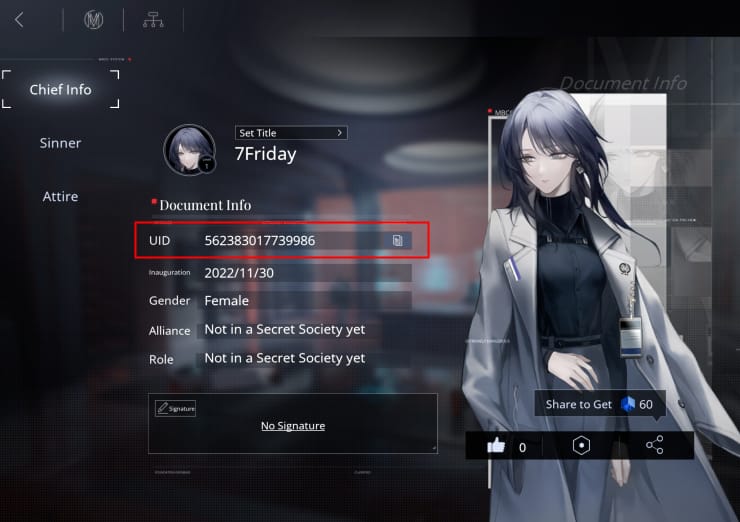
The most important check is not the discount. It is the recipient.
Third-party Path to Nowhere top up commonly relies on a UID, and the UID is shown in the top-left avatar profile in game. If you enter the wrong UID, the recharge may go to another account, and community guidance consistently treats that kind of mistake as hard to reverse. That is why wrong-account recharge is one of the most expensive avoidable errors in this category.
Before paying, verify the account details in the game itself. Log in, open the top-left profile area, and confirm the UID carefully. If the seller asks for server or region information, confirm that too. Even when a route looks simple, account binding mistakes are often harder to fix than payment failures.
The second check is checkout identity. Who is taking the payment, and who is delivering the entitlement? In official app-store billing, that chain is easier to understand. In third-party flows, the payment processor, seller, and game support may not own the same part of the problem. If the site does not make that clear, you are already accepting ambiguity before the order starts.
The third check is policy clarity. Before spending more than a test amount, look for three things: whether the site provides an order ID, whether refund wording is specific rather than generic, and whether support contact exists beyond a vague chat bubble. If a seller cannot explain what happens when payment succeeds but the top-up does not arrive, that is not a minor omission. It is a warning.
A simple buyer mindset helps here: if you cannot trace the order before payment, you probably will not be able to trace it after payment either.
Why do third-party Path to Nowhere top ups feel riskier?

Because support ownership gets blurry very quickly.
A typical third-party flow sounds easy enough: choose a denomination, enter the UID, pay, and receive Ultracubes. In many successful cases, that is exactly what happens. But when it does not, the buyer can end up between multiple parties. The seller may say the payment is pending verification. The payment side may show the charge as completed. Game support may not own the transaction because it was not processed through an official billing route. That handoff problem is the real source of stress.
This is also why refund expectations often become unrealistic. Digital goods are not always easily reversible, especially after delivery or after a UID-based transfer has been completed. Buyers sometimes assume that a failed experience automatically means a simple refund. In practice, refund boundaries depend heavily on who processed the payment and whether the order can be traced clearly. Official channels tend to define those boundaries more clearly. Third-party routes vary.
Discount pressure makes this worse. Community guidance repeatedly treats unrealistic discounts as a scam signal, and that is sensible. A believable discount is one thing; a price that looks detached from every other market signal is another. The same goes for vague delivery promises. Instant is not automatically suspicious, but instant, guaranteed, no explanation, no support path should stop a purchase.
Some products also deserve more caution than others. Community guidance leans toward official checkout for higher-value recharges, and there is also a recommendation to prefer official for battle pass purchases. Monthly card purchases may look small, but they can still matter if you want clean proof of entitlement over time. If you know in advance that you may need a receipt or invoice, official is the easier route.
Field notes from common buyer situations
The safest route changes a bit depending on why you are shopping outside the default path.
A first-time buyer usually benefits most from official checkout, even if the final cost feels less attractive after currency conversion. The reason is simple: your first purchase is when you are still learning the game’s billing flow, your own account details, and what proof looks like if something goes wrong. Community advice often favors a low-value official test purchase for exactly that reason. It reduces ambiguity. For iOS users, there is also a practical comfort factor in official app-store billing because restore-purchase handling is stronger there than with third-party delivery.
An overseas buyer is a different case. Cross-border users are often not chasing a discount first; they are trying to solve payment access. Region mismatch, foreign-card verification, and app-store billing limitations are common friction points. In those situations, a third-party route can make sense if it supports local methods that the official route does not. Codashop, for example, is community-reported as useful in the Philippines, with GCash and Coins.ph support mentioned in the facts. That does not make every cross-border third-party purchase safe by default, but it does explain why some buyers accept the trade-off.
A higher-value buyer faces a different risk again: overconfidence. One of the most common mistakes in digital top-up complaints is not the payment itself but weak proof after payment. Buyers skip screenshots, fail to save the order page, or cannot show exactly which UID was used. If delivery is delayed, they then have very little to give support. For larger recharges, a small test transaction is usually the smarter move, whether you choose official or a vetted third-party route.
Gifting to another person’s UID deserves extra caution too. Community guidance treats friend-UID top-ups on third-party routes as risky because a single digit error can send the purchase elsewhere. That is the kind of mistake that is easy to make and hard to unwind.
What should you do if payment succeeds but the top up does not arrive?

Start by collecting proof immediately, not after you have retried the purchase.
The most useful evidence is straightforward: a screenshot of the UID from the in-game profile, the payment receipt or store confirmation, the order ID or transaction ID, and a screenshot of the product or checkout page showing what you intended to buy. This is the difference between a support request that can be investigated and one that stalls.
Then contact the channel that owns the transaction. If the purchase was made through an official app-store route, use the official support path tied to that billing record. If it was a third-party order, contact the seller or platform support first, because they own the order traceability. Community guidance is consistent on this point: if no entitlement arrives after payment, collect transaction proof and contact platform support.
Be precise in the message. Do not just say the top-up is missing. Include the UID, order ID, payment time, product name, and screenshots. If you entered the wrong UID on a third-party order, contact support immediately, but understand that community reports describe wrong-account delivery as difficult to reverse.
If the site shows a charge but no visible order record, that is a serious traceability problem. Stop retrying payment until support explains what happened. Repeated attempts can make the evidence trail messier, not clearer.
Which route makes more sense for your situation?
If your priority is certainty, official remains the better answer. That includes first-time purchases, higher-value recharges, purchases where you need a receipt or invoice, and situations where you do not want to argue over who owns the problem. It is also the safer default if urgency is low and you can afford to choose the clearer route.
If your main blocker is payment access rather than trust, a vetted third-party route can be reasonable. This is most relevant for cross-border buyers whose cards fail, whose region has billing friction, or who need local payment methods. But reasonable only applies when the seller has believable pricing, visible support, clear UID handling, and usable order tracking. A third-party route should solve a payment problem, not create a support problem.
That is also the right way to think about VGTopup or any similar option: not as automatically safe or unsafe, but as a route that must be judged by traceability, support visibility, and account-verification discipline. If you use a non-official path, verify the account first, keep every proof item, and avoid jumping straight into a large order.
A practical trust check before you place the order
A good Path to Nowhere top up safety check can be done in under two minutes.
First, confirm the exact UID from the in-game profile. Second, make sure you understand whether you are using official app-store billing, official web checkout where available, or a third-party seller. Third, check whether the checkout will give you an order ID and usable receipt. Fourth, read the refund wording closely enough to see whether it says anything concrete about failed or delayed delivery. Fifth, look for a real support path before payment, not after.
If any of the following appear together, stop the purchase: an unrealistic discount, vague delivery promises, no visible support route, unclear refund wording, and poor order traceability. Those are the strongest risk signals in this category.
The simplest rule is still the best one. If you need the clearest proof and after-sales support, choose official. If you need payment flexibility badly enough to consider third-party, make transparency your minimum standard and test small before spending big.
Path to Nowhere top up safety is less about finding a perfect route and more about choosing the route whose risks you can actually manage. Official checkout gives most buyers the cleanest protection. Third-party can be useful, especially for cross-border payment access, but only when the seller is easy to verify and the order is easy to trace.
👉 Path to Nowhere third party top up safe 👈
✅ Safe and convenient digital top-up service
✅ Orders are processed promptly after successful payment
✅ Supports popular products and recharge scenarios
✅ Customer support can help with order issues