
Third-party Arena Breakout: Infinite Bonds top up is not automatically unsafe, but it is only as safe as the seller’s payment source, delivery method, and support trail. The safest route is still official checkout or clearly authorized sellers first. If a deal depends on login access, unrealistic discounts, vague receipts, or pressure to pay outside a normal checkout flow, the savings usually are not worth the scam, chargeback, or account-risk headache. In practice, the real issue is rarely the word third-party itself. It is whether the transaction is traceable, UID-based, and supportable if something goes wrong.
The safest answer is simpler than the debate
If you are making a first purchase, buying a larger pack, or just want the lowest-risk route, use the official website, Level Infinite Pass, or confirmed partners such as Midasbuy and BuffBuff. That is the clearest recommendation.
There is a reason cautious buyers keep coming back to that advice. Official and clearly authorized channels give you the strongest support position if Bonds do not arrive, if the wrong UID is credited, or if a payment enters fraud review. BuffBuff was announced as an official Arena Breakout Infinite top-up partner on Feb 18, 2025. Midasbuy is the official Tencent recharge store and supports a very wide payment network, with 700+ channels noted for Arena Breakout Bonds. For buyers in the Philippines, Midasbuy also supports GCash and GrabPay, which makes it a practical no-card option without forcing you into a murky seller relationship.
That does not mean every non-official seller is automatically dangerous. Community reports consistently push back on that idea. But when official reseller lists are clear, there is little reason to gamble on an unknown discount unless you have verified the seller carefully and understand the trade-off: lower price can mean weaker support, weaker proof, and more uncertainty if the payment is later disputed.
A useful comparison point for buyers weighing routes is Arena Breakout: Infinite top up third party safe.
Can you get banned for using a third-party Arena Breakout: Infinite Bonds top up?
The short answer is no, not simply for using a third-party top-up.
Official enforcement language points toward cheating tools, suspicious accounts, illicit currency transactions, and abuse of game mechanics. That matters because it separates a normal UID-based recharge from the kinds of behavior that actually attract enforcement attention. Community discussion also contradicts the blanket fear that all third-party top-ups lead to bans. Reports commonly say there have been no bans reported from small third-party Bonds top-ups when the process is ordinary and UID-only.
That is the first myth to clear away: all third-party top ups cause bans is too broad to be reliable.
What creates account risk is usually the method behind the order, not the label on the storefront. If a seller uses stolen cards, manipulates receipts, creates region or payment mismatches, or asks for account credentials, the transaction can become risky even if the Bonds appear quickly. Official ban notices and suspicious-account reviews show why this distinction matters. Arena Breakout Infinite has published bans news on its official site, and official notices in 2026 referenced real-time policy action on suspicious accounts and ongoing investigations. That does not prove a normal third-party UID recharge is forbidden. It does show that payment irregularities and suspicious patterns are not invisible.
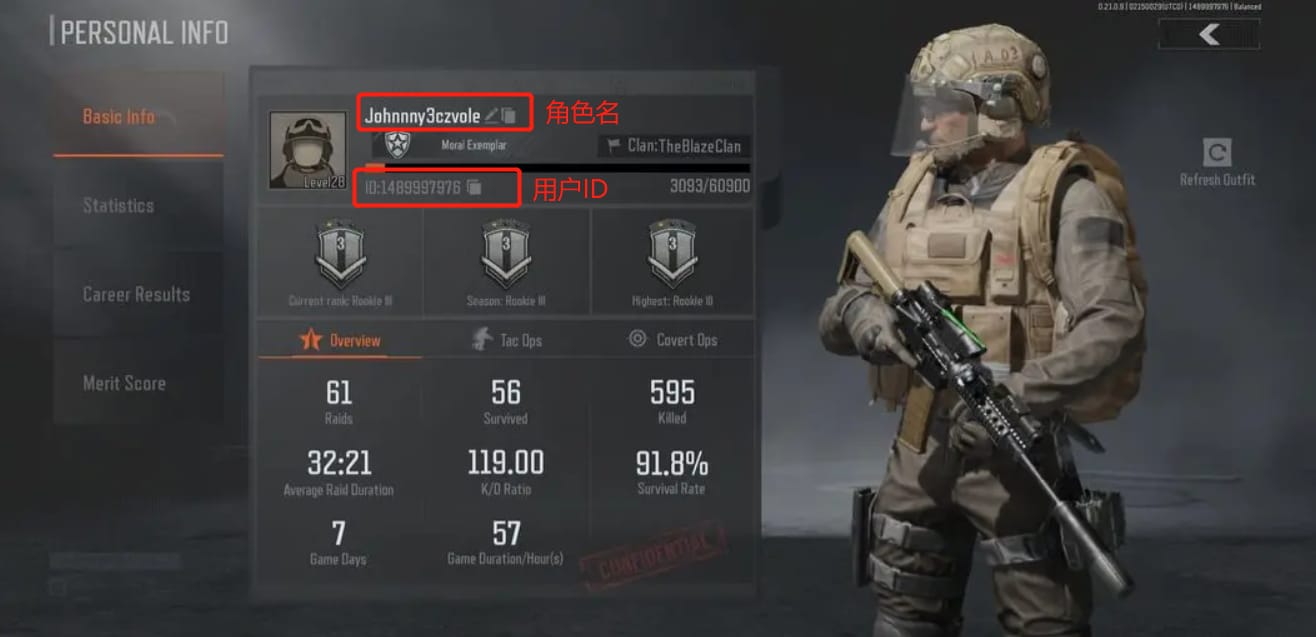
The practical rule is straightforward. A safer top-up flow asks only for your UID, which players can obtain from game settings, and never asks for your password. BuffBuff’s published process follows that pattern: select the Bonds amount, enter UID, then pay. Community consensus also treats password-required top-ups as a major warning sign because they create direct account-compromise risk.
So if you are asking, Can you get banned for using a third-party Arena Breakout: Infinite Bonds top up? the better answer is this: a normal UID-only purchase is not the same thing as cheating or illicit currency abuse, but a bad seller can still expose your account to fraud review or support trouble.
Cheap Bonds are not always fake, but too cheap is where the danger starts
This is where many buyers get misled. A lower price is not automatically a scam. BuffBuff has advertised discounts of up to 30%, so discounted Bonds do exist in legitimate channels. Midasbuy pricing in the Philippines also gives a useful reality check: 100 Bonds cost ₱57.13, 2500 Bonds plus 125 bonus cost ₱1442.01, and 5000 Bonds plus 300 bonus cost ₱2884.02. Those figures do not create a universal global benchmark, but they do help you spot offers that are wildly detached from normal pricing.
The myth that cheap Bonds are always safe if delivery is instant is especially dangerous. Instant delivery proves that something was delivered quickly. It does not prove the payment source was clean. A stolen-card transaction can look perfectly smooth at checkout and still become a problem later if the payment is reversed or flagged. That is why experienced buyers care about proof and seller legitimacy more than speed alone.
The same logic applies to free currency claims. Community consensus is blunt here: fake free Bonds generators are scams, and there is no evidence that real ones exist. Their purpose is usually to collect credentials, push fake verification loops, or lure users into unsafe downloads. If a site promises unlimited or free Bonds outside normal purchase or in-game reward systems, the safest assumption is that it is trying to take something from you.
There is also a softer scam pattern that looks more believable than a fake generator. The seller offers a plausible discount, then nudges you away from standard checkout, asks for payment through an unusual route, or becomes vague about receipts and order IDs. That is often where a good deal stops being worth it. A discount has value only if the transaction remains traceable and supportable after payment.
What actually creates risk in digital top-ups?
From reviewing failed top-up cases across digital goods, the biggest risk is rarely the word third-party. It is the hidden mechanism behind the order.
The clearest danger signs are familiar. A seller asks for your login credentials instead of just your UID. The payment source may be stolen or unauthorized, which can trigger fraud review later. The receipt looks edited or incomplete. The seller promises off-platform gifting instead of a normal recharge flow. The payment region does not match the account or checkout expectations, increasing the chance of failure or review. In each case, the problem is not just whether the Bonds arrive. It is whether the order can survive scrutiny afterward.
This is also why uncertainty boundaries matter. Some points are official and solid: BuffBuff and Midasbuy are confirmed partner routes; purchases are generally non-refundable except where local law requires otherwise; official enforcement targets cheating and illicit abuse rather than ordinary top-ups by default. Other points are community-reported rather than formally guaranteed: Reddit consensus says UID-only top-ups are generally safe, and community reports say no bans have been seen from small third-party Bonds purchases. Those reports are useful, but they are not the same as a published universal immunity policy.
That distinction helps buyers stay realistic. You do not need to panic over every third-party route, but you also should not treat anecdotal success stories as a guarantee that any random seller is safe.
What happens if a Bonds payment is charged back?
The myth here is that chargebacks only hurt the seller. In digital goods, that is not a safe assumption.
If a payment is disputed and reversed, the seller may lose the funds, but the buyer can still be affected. Community reports warn that reversed payments may lead to lost currency or an account being flagged. Even without a public one-size-fits-all rule for every case, the practical risk is obvious: if the currency was delivered through a payment that later fails fraud checks or gets reversed, the transaction becomes contested. That can affect your balance, your support outcome, or how future issues on the account are reviewed.
The refund side is not especially forgiving either. Official policy language says purchases are non-refundable except where local law requires otherwise. That means buyers should not assume they can treat a top-up like a reversible retail order with no downstream consequences. A dispute may recover money in one system while creating a separate problem in the game ecosystem.
This is why proof matters so much before you ever contact support or consider a dispute. Save the order ID, UID or account ID, the exact package selected, the timestamp, the payment method, and screenshots of checkout and confirmation. In recharge troubleshooting, those details often decide whether support can verify what happened. If Bonds do not arrive, or if the wrong account is credited, official support will need evidence that ties the payment to the intended account and package.
A clean support timeline is far more persuasive than a vague complaint. Show when you paid, what pack you chose, which UID was entered, how you paid, and what the seller or checkout page confirmed. If you skip that step and jump straight into a chargeback, you may make a solvable delivery issue harder to untangle.
How can you tell if a third-party Arena Breakout: Infinite top up site is legitimate?
Start with the strongest test available: can you verify the seller through official partner information? Right now, BuffBuff and Midasbuy are the clearest names in the facts provided, and community preference also leans toward those known routes over unknown sites. If a seller claims to be authorized but you cannot connect that claim to official partner information, treat the claim as unproven rather than true.
After that, look at how the transaction works. A safer pattern is simple: choose the Bonds pack, enter UID, pay through a normal checkout, receive an order record. If the seller asks for your password, requests full account access, or wants to log in for you, stop there. Community guidance is consistent that password-required top-ups are not worth the compromise risk.
Then look at the payment behavior. Unrealistically low prices are a warning sign, especially when paired with pressure to complete payment outside the normal checkout page. Region mismatch issues are another clue. Community reports note that region mismatches can cause payment failures, and a trustworthy seller should not brush that off as irrelevant. If the invoice amount does not clearly match the selected package, or if the seller cannot explain the route cleanly, you are not looking at a strong supportable purchase.
Finally, judge the post-payment trail. A legitimate seller should leave you with usable proof. If Bonds arrive but there is no receipt, no order ID, and no way to document the transaction, your position becomes weak the moment anything goes wrong.
For buyers comparing routes, Arena Breakout: Infinite bonds recharge ban risk is really a question of source quality and evidence quality, not just whether the price is lower.
If Bonds do not arrive, what should you do next?
The best response is procedural, not emotional.
First, verify the basics: the UID entered, the package selected, and the payment status in your card, bank, or wallet app. A successful charge does not always mean the order has fully cleared fraud review. If the order is still processing, give it a short window before escalating.
If the issue remains unresolved, contact the seller with the full evidence set: order ID, UID, timestamp, package chosen, payment method, and screenshots. If the seller cannot resolve the issue, if the wrong account was credited, or if the response becomes evasive, escalate to official support with the same evidence. Community guidance is consistent on this point: contact official support with receipts for undelivered Bonds.
This is where buyers who saved proof immediately have a major advantage. The official support path is much stronger when you can show exactly what happened. The first details that usually matter are the order ID, exact account identifier, payment timestamp, and a screenshot of the selected pack.
For cautious buyers, the decision memo is fairly clear:
First purchase: use official checkout, Level Infinite Pass, Midasbuy, or BuffBuff.
No-card buyer: use supported official options such as Midasbuy with GCash or GrabPay where available.
High-value purchase: stay with official or clearly authorized routes.
Unknown seller offering a dramatic discount: avoid it, especially if credentials or off-platform payment are involved.
Discount hunter comparing options: if the support trail is weak, the discount is not worth the risk.
Final verdict for cautious buyers
So, Is Third-Party Arena Breakout: Infinite Bonds Top Up Safe? Sometimes, yes—but only when the route is verifiable, UID-only, and backed by a real order trail. It is not automatically ban-worthy, and community reports do not support the claim that every third-party top-up leads to punishment. But the safest recommendation remains official checkout or confirmed partners like Midasbuy and BuffBuff.
The short rule that avoids most problems is this: if the seller needs only your UID, uses a normal checkout flow, leaves clear payment proof, and does not rely on unrealistic pricing or credential requests, the route may be reasonable. If any of those pieces are missing, walk away. In digital top-ups, a small discount is easy to replace. A compromised account or disputed payment is not.