
Third-party Sugo Coins top up can be safe, but only if the seller is transparent about price, delivery, support, and refund limits—and never asks for your password, login, or verification codes. If you want the lowest policy risk, official checkout is the safest default. If you need better pricing or more payment flexibility, a verified UID-only third-party can be a practical low-risk option.
The real difference isn't just "official vs unofficial." It's payment safety, fulfillment safety, and support ownership. In my experience reviewing recharge issues, most problems come from wrong UID entry, region mismatch, or weak order tracking—not from the top-up model itself.
Why do some users choose official Sugo top up while others use third-party recharge sites?
Users choose official checkout for maximum certainty, and third-party recharge for price and payment flexibility. Both choices make sense depending on your risk tolerance.
Sugo is an official voice chat and video call app on Google Play and the Apple App Store, and Sugo Coins are its in-app currency for gifts, rooms, and premium features. Official in-app top-up is the clearest route because payment and delivery stay inside the app ecosystem. Community pricing reports put 1200 Coins at $0.99 in-app.
Third-party sellers attract buyers for a simple reason: value. Community and single-source pricing snapshots show 1200 Coins around $0.75-$0.80 on third-party sites, or roughly 19-20% lower, and 37,500 Coins at $8.94 versus $9.99 officially, about 11% less. After the April 2026 price hike, users became even more price-sensitive.
From comparing checkout paths, the biggest practical difference isn't only cost. It's whether the site clearly shows:
final payable amount
delivery estimate
supported region/server
refund boundaries
who handles a missing-order case
If you want a quick benchmark for Sugo Coins Top Up official vs third party, start there.
What trust signals show that a third-party Sugo Coins recharge is actually safe?
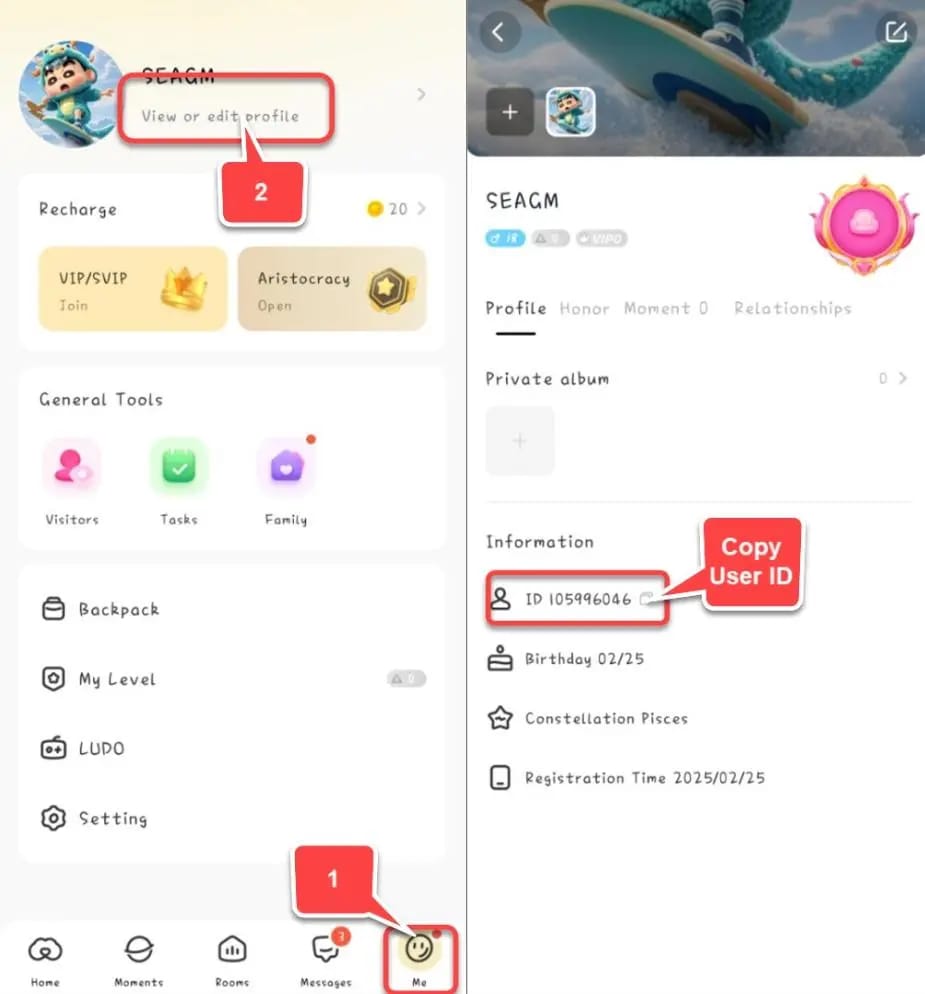
A safe third-party Sugo Coins recharge should be UID-only, trackable, and support-backed. That's the baseline.
Users commonly report that reputable Sugo top-up sellers only require your numeric User ID. They do not need your password. They do not need email verification codes. And they should never ask you to hand over account access for "manual processing."
That red-line matters because payment safety and fulfillment safety are different:
Payment safety = your card, wallet, or bank transaction is handled properly
Fulfillment safety = the coins actually reach the correct Sugo account
Many guides blur those together. They shouldn't.
Trust checks that matter most
Community experience also suggests low ban risk when the seller uses authorized distributor-style UID delivery and doesn't require account takeover. I found no official Sugo help-center warning specifically banning third-party UID-only top-ups in the available 2026 data. That's not the same as official endorsement, but it does matter.
Personally, I would avoid any seller that asks for:
password
SMS or email verification code
direct login to your Sugo account
off-platform "cash-out" or unusual credit card handling
Users commonly report losing funds in those situations.
How do official and third-party Sugo Coins top up options compare on support, tracking, and risk?
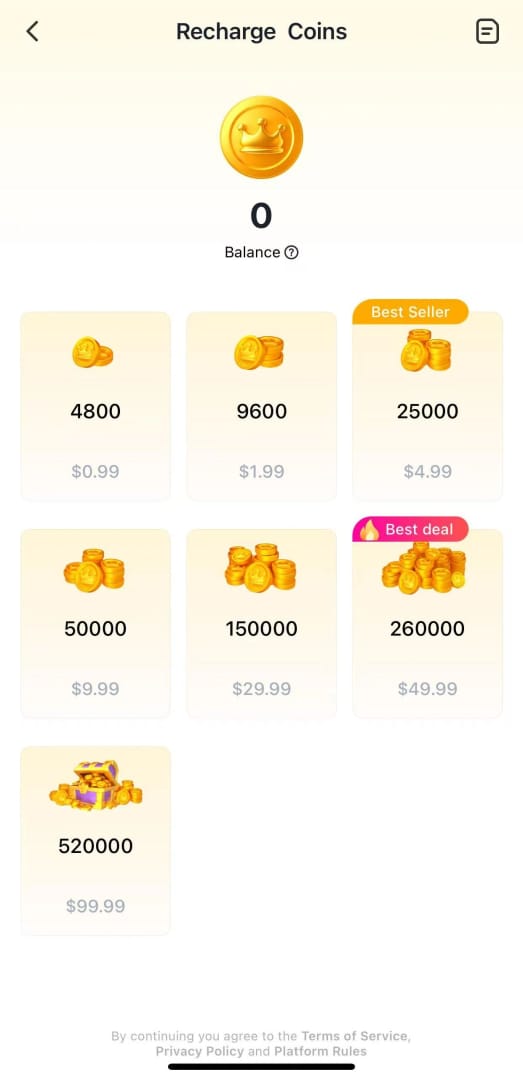
Official checkout is safer by policy clarity; good third-party checkout can be safer on convenience and tracking. That's the fair comparison.
A few practical points buyers miss:
A successful bank charge doesn't always mean the order cleared verification. CodaPay-linked verification holds are a known delay point.
Third-party support can actually be clearer for missing-order cases because they usually ask for order ID, payment proof, and UID in one place.
Official checkout is still the cleanest option if you hate dispute ambiguity.
For buyers comparing whether Sugo Coins Top Up third party safe, the answer depends less on the label and more on whether the seller passes the checklist above.
How can you recharge Sugo Coins safely if you decide to use a third-party site?
Use a third-party site safely by treating it like a payment-and-delivery workflow, not a casual impulse buy.
Confirm the exact Sugo account identifier.
Enter the numeric UID exactly as shown in your Sugo account. From reviewing failed recharge cases, wrong UID and region mismatch account for most missing-coin complaints; one source puts wrong UID/region behind 90% of cases.Check region and server support before paying.
Some sellers support global non-Taiwan servers and exclude Taiwan. Cross-border top-ups can fail if account region, IP, and payment country don't line up. VPN use is also commonly reported to trigger fraud checks.Review the full checkout details.
Verify coin package, final price, currency, and delivery estimate. Community reports suggest about 85% of third-party transactions process in 1-5 minutes, but not all do.Choose a payment method with a clear dispute path if possible.
In practice, card payments are usually safer than irreversible crypto for buyer protection. Community experience consistently favors chargeback-eligible methods over no-refund payment rails. But don't abuse chargebacks: one source reports chargebacks after coin delivery can lead to balance deduction or account bans.Save evidence before leaving the page.
Keep the order ID, transaction ID, payment timestamp, amount paid, and screenshot of the confirmation page. Honestly, delayed delivery is frustrating when the money already left your account, and this evidence is what gets support moving.Don't spam retries.
Rapid recharge attempts can trigger security flags. If payment fails, use the preserved cart window if available, or switch method once instead of hammering the button.
If you proceed with VGTopup, the safe path is simple: provide the correct unique Sugo UID only, confirm region compatibility, and keep your order record.
What should you do if your Sugo Coins top up is delayed, failed, or sent to the wrong account?

First, verify the order details before opening a ticket. Most delays are fixable, but only if you bring the right evidence.
Check these first
UID accuracy — one wrong digit is enough.
Region/server match — especially for cross-border orders.
Payment status — authorized, captured, or still under review.
Delivery window — many orders are fast, but verification can hold them.
VPN or IP mismatch — this can trigger fraud detection.
Duplicate attempts — repeated payments can complicate matching.
Then contact the right support
Third-party order issue: contact the seller's support with order ID, correct UID, payment proof, and timestamp. Community experience says 24/7 support often resolves redelivery cases.
Official app issue: use the Sugo app help center.
Unauthorized access concern: change your password and revoke sessions through Sugo support immediately.
One more edge case: Sugo Coins are generally treated as non-refundable virtual items. So if the coins were delivered to the wrong account because you entered the wrong UID, recovery is much harder than a normal payment dispute.
Is third-party Sugo Coins top up safe?
Yes—if the seller is UID-only, transparent, and supportable. Official checkout remains the safest default, but verified third-party recharge is widely used and commonly reported as low-risk when it doesn't require account access.
What is safer: official Sugo top up or a third-party recharge site?
Official top-up is safer on policy certainty. A good third-party site can still be safe in practice, especially if you need local payment methods or lower pricing.
How can I tell if a Sugo Coins top up site is legit?
Check for UID-only delivery, visible final pricing, order tracking, support access, and region guidance. If the site hides fees or lacks a clear dispute path, I would pass.
What details should a Sugo Coins seller never ask for?
Never give your password, login session, email code, or SMS verification code. A normal Sugo top-up only needs your numeric UID.
Can I get a refund if my Sugo Coins top up does not arrive?
It depends on the seller and payment method. Card-based payments usually give you a clearer dispute path than irreversible payment methods, but virtual-item refunds are often limited once delivery is confirmed.
Why is my Sugo Coins recharge delayed or pending?
Common causes are payment verification holds, wrong UID, region mismatch, VPN interference, or repeated recharge attempts. A successful charge alone doesn't confirm coin delivery.
Can I top up Sugo Coins from another country?
Sometimes, yes—but cross-border top-ups carry more risk. Check server support, account region, payment-country match, and avoid VPN use during checkout.
Third-party Sugo Coins top up can be safe, but only when the seller keeps the process simple: UID-only delivery, clear pricing, order tracking, and real support. If you want the least ambiguity, use official checkout or an official partner such as Codashop. If you choose a third-party route, verify your UID, region, and payment details first—then use a trackable service like VGTopup only when the terms are clear and the checkout stays low-risk.