
The Blockman Go 60 Gcubes Pack is worth it when your goal is to spend as little as possible without overcommitting: testing whether delivery works, topping off a balance, or setting a hard limit for a first purchase. Officially, it costs USD 0.99 on pay.blockmango.com, so it is the true entry-level option. But it is not automatically the best value. If you already expect to buy again soon, repeated small purchases can become the more expensive and more annoying route once tax, currency conversion, and checkout friction are added. For a quick purchase reference, see Blockman Go 60 gcubes top up.
Is the Blockman Go 60 Gcubes Pack actually worth it?
For the right buyer, yes. For the wrong buying pattern, no.
That distinction matters more than the headline price. The smallest Blockman Go recharge is useful because it lowers risk. A first-time buyer can confirm the correct account gets credited. A parent can cap spending at a very low amount. A casual player can avoid loading more premium currency than they realistically plan to use. In that sense, the Blockman Go 60 Gcubes Pack is not just cheap; it is strategically small.
Where people get disappointed is when they treat a micro-purchase like a normal spending plan. Gcubes are the premium currency used for in-game money, perks, and items, so 60 Gcubes should be viewed as a controlled amount, not a broad-purpose balance. It is enough to start, test, or top off. It is usually not enough for someone who already knows they will keep spending.
From reviewing low-value top-up cases, the most common regret is not buying the smallest pack once. It is buying the smallest pack twice because the original need was underestimated. That is why the 60 pack works best as a deliberate one-off decision, not a default habit.
If you want the broader context around safe buying routes, this is also where a full Blockman Go top-up guide or Blockman Go payment and account help hub becomes useful: the pack size is only half the decision, and the payment path is the other half.
What can 60 Gcubes realistically do?
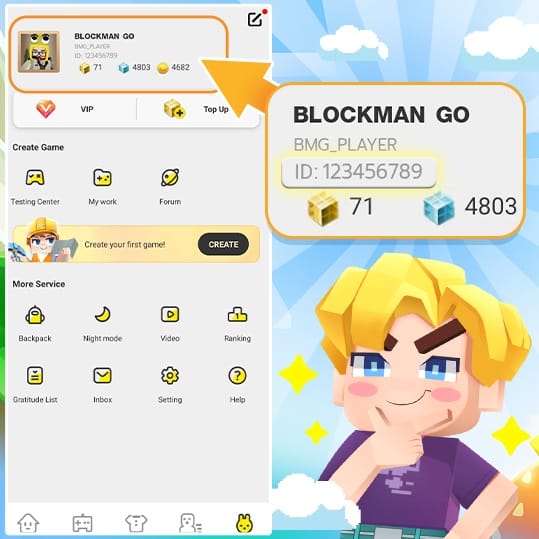
The safest way to answer this is carefully: 60 Gcubes can cover a small, specific purpose, but not an all-purpose shopping session.
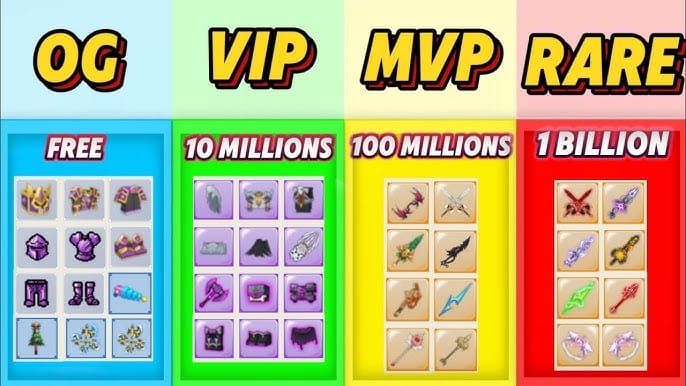
The facts support what Gcubes are for—premium purchases such as in-game money, perks, and items like Titan armor in Skyblock—but they do not support inventing a universal item list or exact buying power across every mode. So the honest value audit is about use cases, not fantasy math.
In normal use, 60 Gcubes makes sense in four situations.
First, it works as a test purchase. This is especially sensible for a first-time buyer who wants to confirm that the entered UID is correct and that the chosen payment route actually delivers. Spending USD 0.99 to verify the process is often smarter than risking a larger amount on the wrong account.
Second, it works as a top-off purchase. If you are only slightly short of a target, the smallest Blockman Go recharge can be the cleanest way to avoid overbuying.
Third, it suits a strict budget cap. Some buyers do not want a better value pack if that means holding more premium currency than they intended to spend. For them, the smallest pack is not a compromise; it is the point.
Fourth, it can be more attractive during a same-price bonus-style offer. One reported example is Daily Game Pack 1, which contains 60 Gcubes and 30 Tokens for USD 0.99. Because that is version-specific and event-like, it should be treated as a nice extra when available, not a permanent baseline.
The wrong expectation is to assume 60 Gcubes should cover repeated premium spending. It usually will not. If your real plan is ongoing purchases, the smallest pack stops being a budget tool and starts becoming a stopgap.
When does a larger pack become the smarter buy?
The clearest threshold in the available facts is simple: once you are considering repeated 60-pack purchases, value starts to tilt away from the smallest pack.
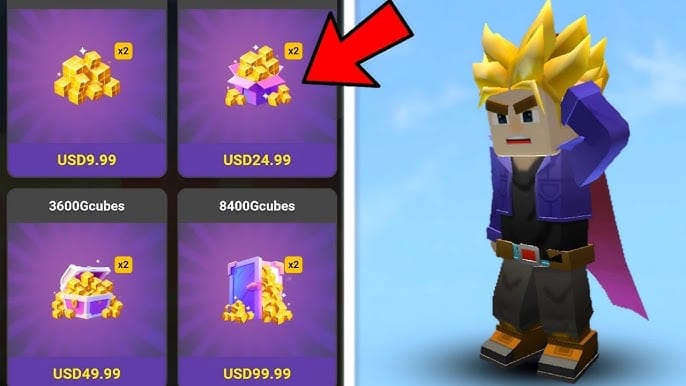
Official pricing is:
60 Gcubes — USD 0.99
300 Gcubes — USD 4.99
600 Gcubes — USD 9.99
1650 Gcubes — USD 24.99
3600 Gcubes — USD 49.99
On paper, the 60 pack is the lowest-cost entry. In practice, community guidance repeatedly points to the same pattern: budget buyers often start with 60, then move to 300+ for better value per Gcube once they know they will spend again. There is also a practical threshold noted in the facts: repeat small purchases become inefficient, with a threshold at 3x60 versus the 300 pack.
That threshold matters for two reasons.
The first is obvious: three 60-pack purchases still do not equal a 300-pack amount, yet they require three separate checkouts. The second is less obvious but often more important: each extra checkout is another chance for tax, currency conversion, payment verification, or billing delay to get in the way.
So the smarter buying rule is not always buy bigger. It is this:
Buy 60 Gcubes once if you are testing, topping off, or intentionally limiting spend.
Move up to 300 Gcubes or more if you already know a second purchase is likely.
Do not confuse smallest with best value once repeat spending enters the picture.
That is the real answer to 60 Gcubes worth it?** It is worth it as a micro-purchase. It is weak as a repeat strategy.
Why can a cheap Blockman Go top-up cost more than expected?
Because the displayed pack price is not always the same as the final cost you feel.
Officially, the web price for 60 Gcubes is USD 0.99. That part is straightforward. What changes is the checkout environment around it. For low-cost digital purchases, even small billing differences become noticeable because the base amount is so small.
A few common realities can make a Blockman Go low cost pack feel less cheap than expected:
Taxes and local billing rules.
Depending on the route, tax may appear at checkout rather than in the headline pack price.
Currency conversion.
If your payment method or store region is not aligned with the displayed currency, the final amount can shift. That is why first-time buyers are advised to verify the local currency shown before paying.
App-store rounding and billing behavior.
The Google Play and Apple App Store support in-app purchases, and they can be the safest route for many users. But store billing can still behave differently from a web checkout, especially when local pricing, tax handling, or account region settings are involved.
Payment verification friction.
Even a tiny order can trigger card checks or 3-D Secure. That surprises buyers because the amount feels too small to matter, but the payment system does not always care that the purchase is only USD 0.99.
This is why a cheap top-up can still become inconvenient. The issue is not that the 60 pack is overpriced. The issue is that very small purchases are less forgiving when billing friction appears. If you have to repeat the process, the convenience advantage disappears quickly.
For route-specific help, this is where related guidance like Blockman Go app store vs web checkout can save time before you buy.
How do you check that a Blockman Go discount is safe?
Start with a blunt rule: for a micro-purchase, safety matters more than saving a few cents.
The facts do show slight price differences on some third-party listings. For example, single-source listings mention 60 Gcubes around USD 0.90–0.94, USD 1, or USD 1.05. But those are not official sources, and the article brief is clear that safe discount checks should not rely on risky account-sharing flows or unofficial seller trust.
So the safest benchmark is still the official route: pay.blockmango.com, the official Blockman Go top-up center, or in-app purchases through Google Play and the Apple App Store.
A safe discount check is less about chasing the lowest number and more about asking whether the offer preserves the normal proof trail and account safety:
If a seller asks for anything beyond the normal account identifier flow, that is a problem. The facts support that UID is required for all top-ups to credit the correct account. They also support avoiding account sharing. So if a deal asks for login credentials, off-platform contact, or unusual access, it is not a smart budget move.
If the discount is tiny, ask whether it survives the full checkout. A few cents off can disappear once fees or conversion are added.
If the proof trail is weak, walk away. A legitimate purchase path should leave you with an order ID, receipt, and ideally an invoice. Those matter far more than a flashy discount banner if delivery is delayed.
And if the price looks too aggressive to make sense on a USD 0.99 item, skepticism is healthy. Across budget-buyer content, the safest savings usually come from avoiding wrong-account mistakes and fake-discount traps, not from squeezing the last possible cent out of the headline price.
The official guidance in the facts is also clear on one broader safety point: use official pay.blockmango.com to avoid risky third-party sellers, and avoid refund abuse because fraudulent refunds can lead to Gcubes reclaim and account bans.
What should you verify before paying?
Most top-up problems begin before payment, not after it. The key checks are the account ID, the bound account, the region, and the displayed currency.
This is where many thin guides become too generic. In real support cases, the first details that matter are usually the exact account identifier, the store or payment region, and the order proof. If one of those is wrong or missing, even a small purchase can take longer to fix than it should.
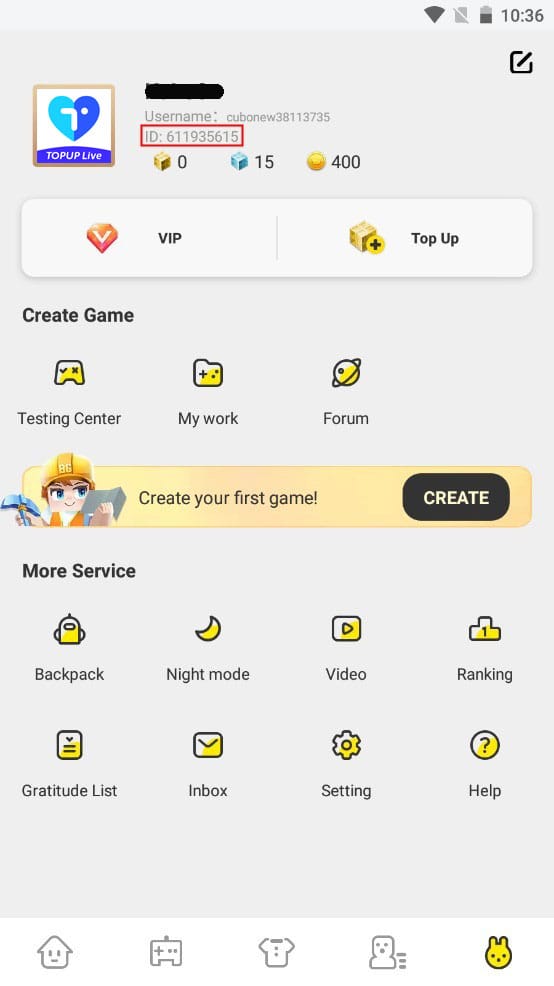
Before paying for the Blockman Go 60 Gcubes Pack, verify that you are using your own current UID. Do not rely on an old screenshot if you are not sure it is still correct, and do not use a shared account flow. The facts explicitly support using your own UID and avoiding account sharing to prevent delivery issues.
Next, confirm that the account is properly bound. Community guidance recommends binding the account with email or phone before top-up to prevent loss on a device change. That matters not only for delivery confidence, but also for recovery if you later switch phones.
Then check the country, region, and local currency shown at checkout. A mismatch here can affect both the final amount and the payment success rate. First-time buyers are specifically advised to verify the local currency display in the app store before purchase.
Finally, know which payment route you are using:
The facts mention community-reported options such as ShopeePay, GoPay, SimCard for Indonesia and GCash on a Philippines top-up source, along with GrabPay and OVO in some regional contexts. Those can be useful for no-card buyers, but the same rule still applies: the payment method does not fix a wrong UID or region mismatch.
If you want a deeper walkthrough, this is the point where Blockman Go account verification before recharge becomes more useful than another price comparison.
What proof should you save if Gcubes do not arrive?
Save enough to prove both the payment and the intended destination.
The minimum useful proof set is:
Order ID
Receipt
Invoice
UID
A screenshot or record showing payment success
Purchase time
Any server or region detail requested during checkout
The facts repeatedly support this. Users are advised to save the payment receipt and UID for support if Gcubes are not added, and order ID, receipt, invoice proof are noted as needed for reimbursement claims. There is also a version-specific note that new accounts may face top-up delays, in which case support should be contacted with the order ID.
This is not just paperwork for its own sake. In payment troubleshooting, missing proof often slows support more than the payment issue itself. A buyer who has the exact UID, receipt, and order record is already in a much stronger position than someone who only remembers that the charge went through.
If the purchase was made through Google Play and the payment shows as pending, one reported fix is retrying the purchase or clearing cache. But do not keep tapping buy repeatedly. Duplicate low-value orders create a second problem on top of the first.
And one policy point is worth stating plainly: if Gcubes were delivered, do not attempt a fraudulent refund. The facts indicate that refund abuse can lead to reclaimed Gcubes and account penalties.
For follow-up help, this is where related guides like Blockman Go top up not received or Blockman Go receipt or invoice guide are the practical next step.
So who should buy the 60 pack, and who should move up?
The best answer is by buyer type, not by hype.
A first-time buyer is the strongest match for the 60 pack. If your main concern is whether the right account gets credited and whether the payment route works cleanly, the smallest Blockman Go recharge is the sensible place to start.
A one-time spender also fits the 60 pack well, as long as the amount covers the exact need. In this case, avoiding leftover premium currency can be more important than maximizing value per Gcube.
A repeat spender should usually skip the smallest pack once repeat intent is clear. Community guidance consistently points budget buyers toward 300+ when they already know they will spend again.
An event-driven spender sits in the middle. If a same-price event-style pack such as the reported Daily Game Pack 1 is available, the 60-pack format becomes more attractive. If not, the decision returns to the same question: is this a one-off need, or the start of repeated spending?
That is the practical matrix behind the article’s verdict. The Blockman Go 60 Gcubes Pack is useful, but mostly as a controlled entry point. It is not the universal best buy.
If you want the smallest practical Blockman Go top-up without overbuying, use VGTopup only after confirming your account details and final checkout price.